Język
Kraj/region
Masz już konto?
Zaloguj się, aby szybciej realizować zakupy.
Plexiwire
Niski poziom zapasów: pozostało 2
Nie można załadować gotowości do odbioru
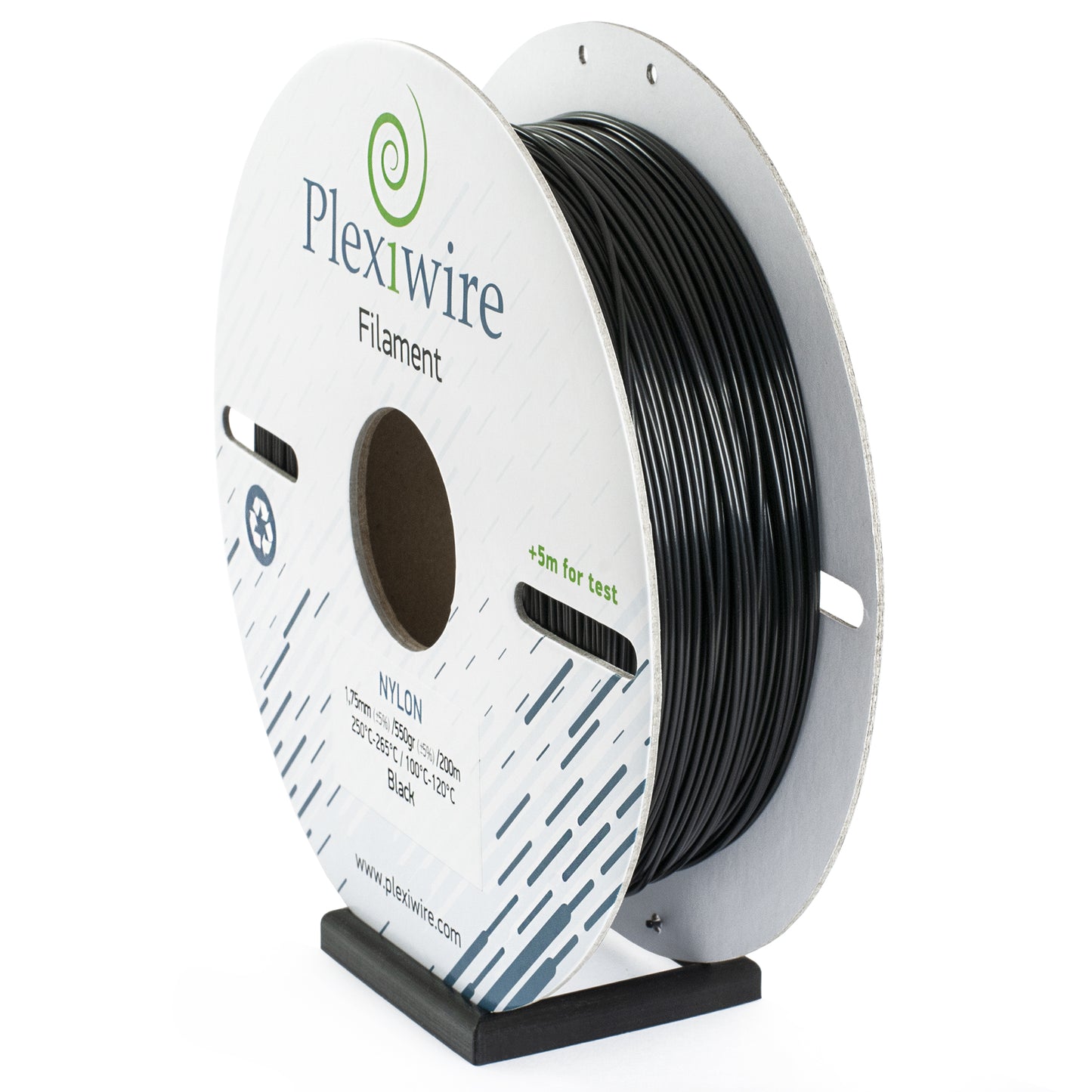

Filament NYLON PA6 czarny 1,75 mm, 550 g / 200 m to filament Plexiwire do druku 3D. Nylon jest materiałem do trwałych i odpornych mechanicznie części, które wymagają dobrej wytrzymałości podczas użytkowania.
Nylon jest wybierany do elementów wymagających trwałości, odporności mechanicznej i pracy w warunkach obciążenia. Może służyć do prototypów technicznych, uchwytów, części mechanicznych i komponentów, w których większa wytrzymałość jest ważniejsza niż wyłącznie wygląd.
Aby uzyskać powtarzalne rezultaty, należy chronić materiał przed wilgocią i dostosować ustawienia drukarki do konkretnej geometrii modelu. Stabilny przepływ oraz właściwa temperatura mają szczególne znaczenie przy częściach technicznych.
Kolor wariantu to czarny. Filament jest dostępny na szpuli o masie netto 550 g i przybliżonej długości 200 m. Format 1,75 mm jest przeznaczony do popularnych drukarek FDM korzystających ze standardowej średnicy filamentu. Mniejsza szpula jest wygodna do testów koloru, prototypów i krótkich serii, natomiast większa ogranicza potrzebę wymiany materiału przy regularnej pracy i dłuższych wydrukach.
Równe podawanie materiału oraz dobranie temperatury do drukarki ułatwiają uzyskanie czytelnych detali i powtarzalnej powierzchni. Po zakończeniu pracy szpulę warto przechowywać w suchym miejscu, aby materiał był gotowy do kolejnego projektu.

