Sprache
Land/Region
Hast du ein Konto?
Logge dich ein, damit es beim Checkout schneller geht.
PLA is the most widely used of all 3D printing filaments, and for practical reasons: it prints at 200–230 °C with a 40–60 °C bed on any 3D printer, requires no enclosure, and produces minimal odour. It delivers clean detail, reliable bridging and a dependable first layer, which is why many users continue to rely on it well beyond their first projects.
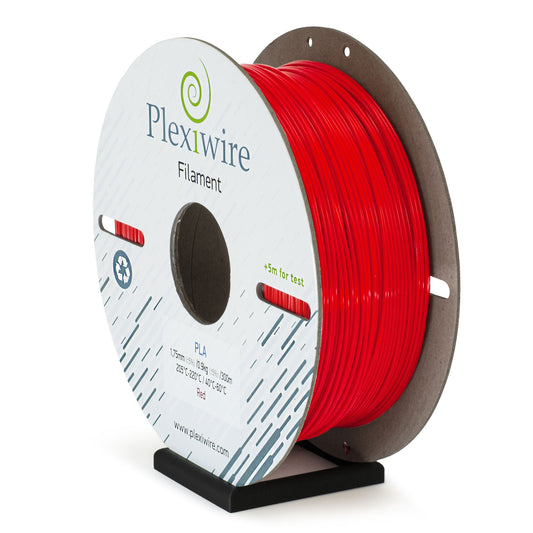
The range includes Black, White, Gray, Silver, Steel, Natural, Red, Blue, Light Blue, Green, Lime Green, Yellow, Orange, Pink, Purple and Brown, plus the metallics Gold, Bronze and Copper.
Because the filament is extruded in-house, colour is consistent between orders. A PLA Gold purchased months apart will match, which matters on multi-spool models where a batch change would otherwise be visible at the transition.
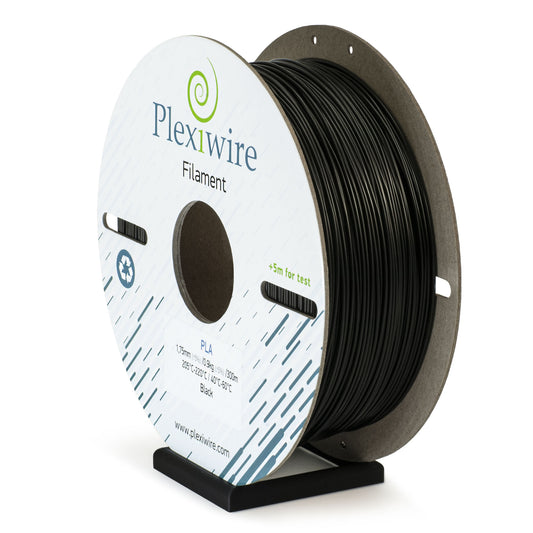
The 300 g / 100 m spool suits testing a colour or a single model. The 900 g / 300 m spool is the standard everyday size. The 1.2 kg / 400 m spool suits batch work and long prints with fewer changeovers. All spools are 1.75 mm on Ø200 mm cardboard with a Ø55 mm hub.
PLA is only mildly hygroscopic and most spools never require drying. If a spool has been stored open in humid conditions and shows stringing or extrusion noise, dry it at 40–45 °C for 4 to 6 hours. Do not exceed 50 °C, as higher temperatures can soften the winding. Storing the spool in a sealed bag with desiccant avoids the issue.
PLA softens at approximately 60 °C. Parts exposed to direct sunlight, high ambient heat, or proximity to a motor may deform. This is a characteristic of the material rather than a fault. For applications involving heat, PETG or ABS is the appropriate choice. For general-purpose printing, PLA remains the most suitable option.
For functional parts, compare with PETG before committing to a larger spool.