Language
Country/Region
Plexiwire
Out of stock
Couldn't load pickup availability


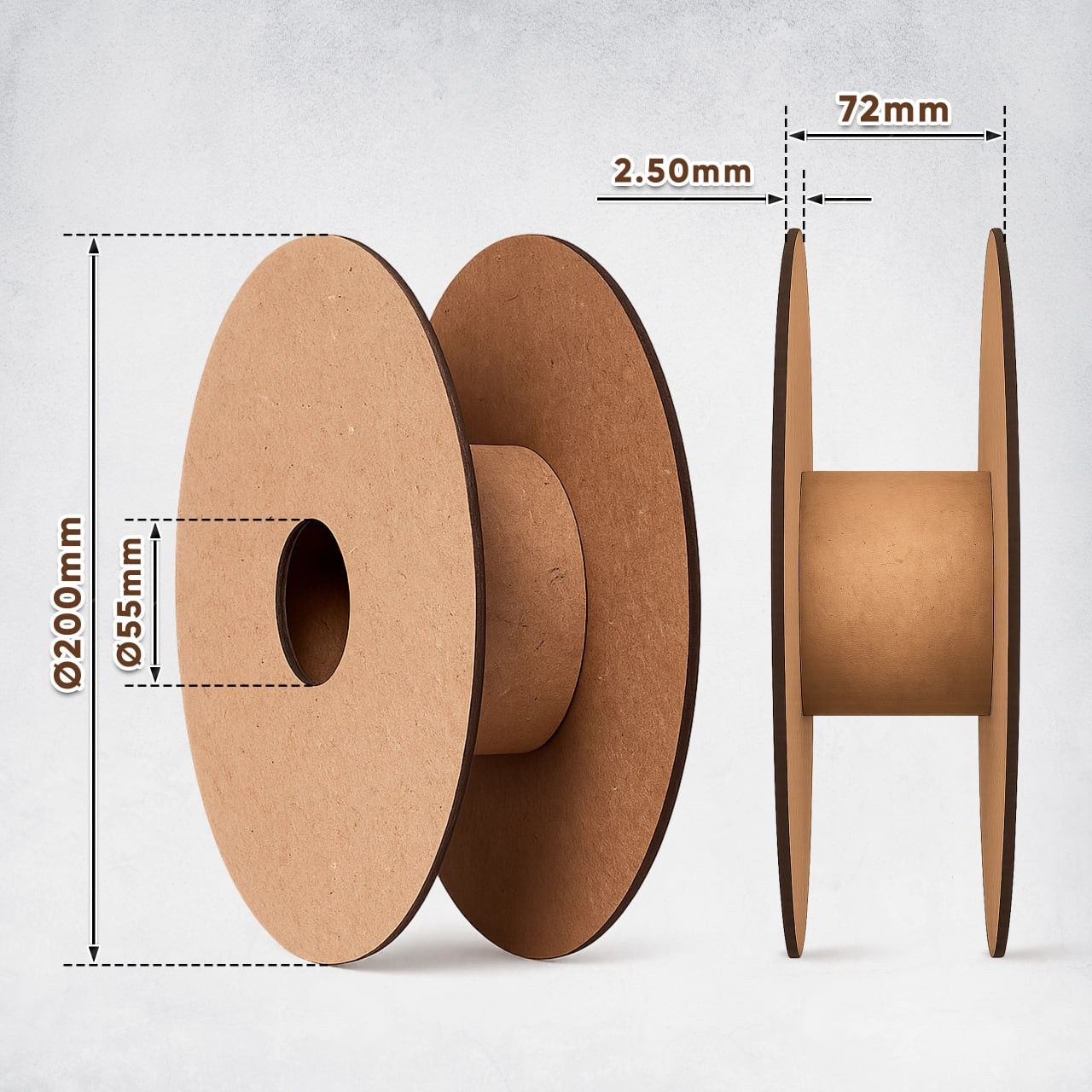

Black flex filament 1.75 in a 600 g (200 m) spool is built for prints that need movement rather than rigidity. When parts have to bend, compress, or absorb impact, a flexible material like this becomes the more practical choice.
Compared to standard rigid filaments, flex behaves differently right from the start. It requires a bit more attention during setup, but once dialed in, the printing process becomes stable and predictable.
With black flex filament 1.75, the key difference shows up in how printed parts behave after printing. Instead of staying rigid, they retain elasticity, which makes them suitable for functional applications where movement or shock absorption matters.
In practice, this kind of filament is often used for protective elements, soft-touch components, or parts that need to handle repeated stress without cracking.
Flexible materials can be sensitive during extrusion, but flex filament 1.75 is designed to maintain a consistent flow when printing parameters are properly set. The filament feeds smoothly with the right setup, helping reduce common issues like uneven extrusion or material buckling.
That consistency is especially important for longer prints. A steady flow helps maintain layer adhesion and keeps the structure uniform.
A 600 g spool gives you enough material to complete functional parts without being overly large. It works well for projects that require multiple iterations or medium-sized components.
For many makers, this size hits a balance — enough material for real applications, but not so much that it becomes difficult to manage.
Flex filament black is often chosen for parts where appearance is secondary to function, but still important. Black provides a clean, uniform look that works across a wide range of applications.
On finished parts, the color helps hide minor surface variations, giving prints a more consistent overall appearance.
Black flex filament is commonly used for components that need to bend, compress, or handle repeated use. From protective elements to mechanical interfaces, flexibility becomes the defining feature.
Black flex filament 1.75 in a 600 g (200 m) spool is a reliable option when rigidity is not enough. It allows you to produce parts that respond to stress instead of resisting it.
FLEX filament is used for printing protective flexible elements for machine and mechanism units, as well as oil seals and other types of sealing elements. Naturally, it is also used for prototyping rubber products. Also, any damper and vibration protection elements are printed from FLEX. Given its properties, the filament can be used to print any product, the application of which requires such a property as flexibility. For example, elements of footwear and automotive parts.
The flexibility of FLEX plastic requires a special approach when printing.
First, it is not fast plastic. It needs to need print slowly - do not set the filament feed faster than 30 mm / s.
Secondly, if you have a bowden feed printer, it will be much more difficult to print than with a direct feed. Judging by the feedback from our customers, printing on bowden is possible, but we recommend direct feeding, which will help to avoid difficulties in work.
Third, follow the recommendations for temperature and speed, carefully adapting them to your results, because the FLEX filament is easily deformed in the nozzle. In general, we recommend using a separate nozzle for this filament - the remnants of old filaments of other types can greatly complicate the process.
Fourth, FLEX absorbs moisture well, so it is important to observe safe storage conditions. In this case, when printing, it is better to ensure that the filament moves freely without any resistance, so that the feed mechanism does not apply force and start to “pull” the material, which can cause stretching or bending.


