Language
Country/Region
Plexiwire
Out of stock
Couldn't load pickup availability


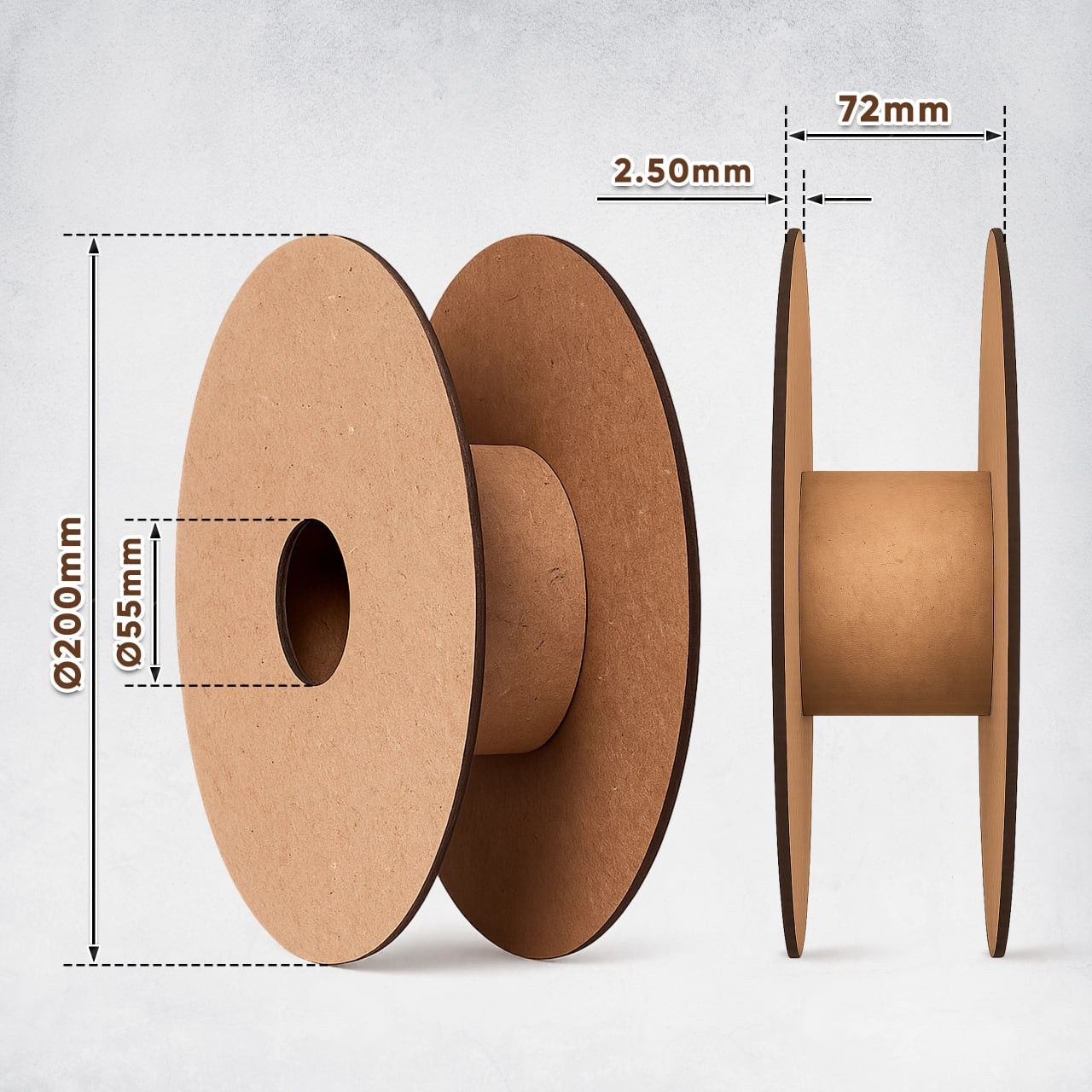

Grey flex filament 1.75 in a 900 g (300 m) spool is usually picked when flexibility needs to hold up across longer prints or repeated production.
Flexible filament changes how parts behave, allowing them to absorb pressure instead of resisting it.
With grey flex filament 1.75, parts bend and compress under load, returning to shape afterward.
In practice, flex filament grey is often used for covers, protective elements, and contact-based components.
Flexible materials require careful setup, but once tuned, flex filament 1.75 runs in a steady and predictable way.
The filament feeds smoothly and layers build without sudden changes.
A 900 g spool supports longer prints and multiple parts without interruptions.
It remains practical for everyday use while offering extended capacity.
Grey flex filament provides a balanced, understated appearance.
It also helps reduce the visibility of minor surface imperfections.
Grey flex filament is suited for parts that need to move, compress, or handle repeated stress.
Grey flex filament 1.75 in a 900 g (300 m) spool is ideal for longer workflows and consistent production.
FLEX filament is used for printing protective flexible elements for machine and mechanism units, as well as oil seals and other types of sealing elements. Naturally, it is also used for prototyping rubber products. Also, any damper and vibration protection elements are printed from FLEX. Given its properties, the filament can be used to print any product, the application of which requires such a property as flexibility. For example, elements of footwear and automotive parts.
The flexibility of FLEX plastic requires a special approach when printing.
First, it is not fast plastic. It needs to need print slowly - do not set the filament feed faster than 30 mm / s.
Secondly, if you have a bowden feed printer, it will be much more difficult to print than with a direct feed. Judging by the feedback from our customers, printing on bowden is possible, but we recommend direct feeding, which will help to avoid difficulties in work.
Third, follow the recommendations for temperature and speed, carefully adapting them to your results, because the FLEX filament is easily deformed in the nozzle. In general, we recommend using a separate nozzle for this filament - the remnants of old filaments of other types can greatly complicate the process.
Fourth, FLEX absorbs moisture well, so it is important to observe safe storage conditions. In this case, when printing, it is better to ensure that the filament moves freely without any resistance, so that the feed mechanism does not apply force and start to “pull” the material, which can cause stretching or bending.


