Sprache
Land/Region
Hast du ein Konto?
Logge dich ein, damit es beim Checkout schneller geht.

Blue abs+ filament 1.75 sits in that comfortable middle ground — noticeable enough to see clearly, but not distracting. It’s a practical choice for everyday printing, especially when you’re working with multiple parts at once.
This spool contains 750 g of filament, which is roughly 300 meters. The diameter is 1.75 mm, so it works with most FDM printers without any special setup.
ABS+ is commonly used for brackets, enclosures, mounts, and other functional parts that need to keep their shape during use.
Abs+ filament blue makes it easy to identify parts without making them too visually dominant. Many makers use blue abs+ filament for prototypes and functional components.
A consistent abs+ filament 1.75 feeds smoothly and helps maintain stable extrusion. When material flow remains steady, printed parts tend to hold their intended geometry more accurately.
Because of that, blue abs+ filament 1.75 is often used for workshop tools, prototypes, and replacement parts.
A 750 g spool provides enough material for several prints while still being convenient for everyday use.
Technical specifications
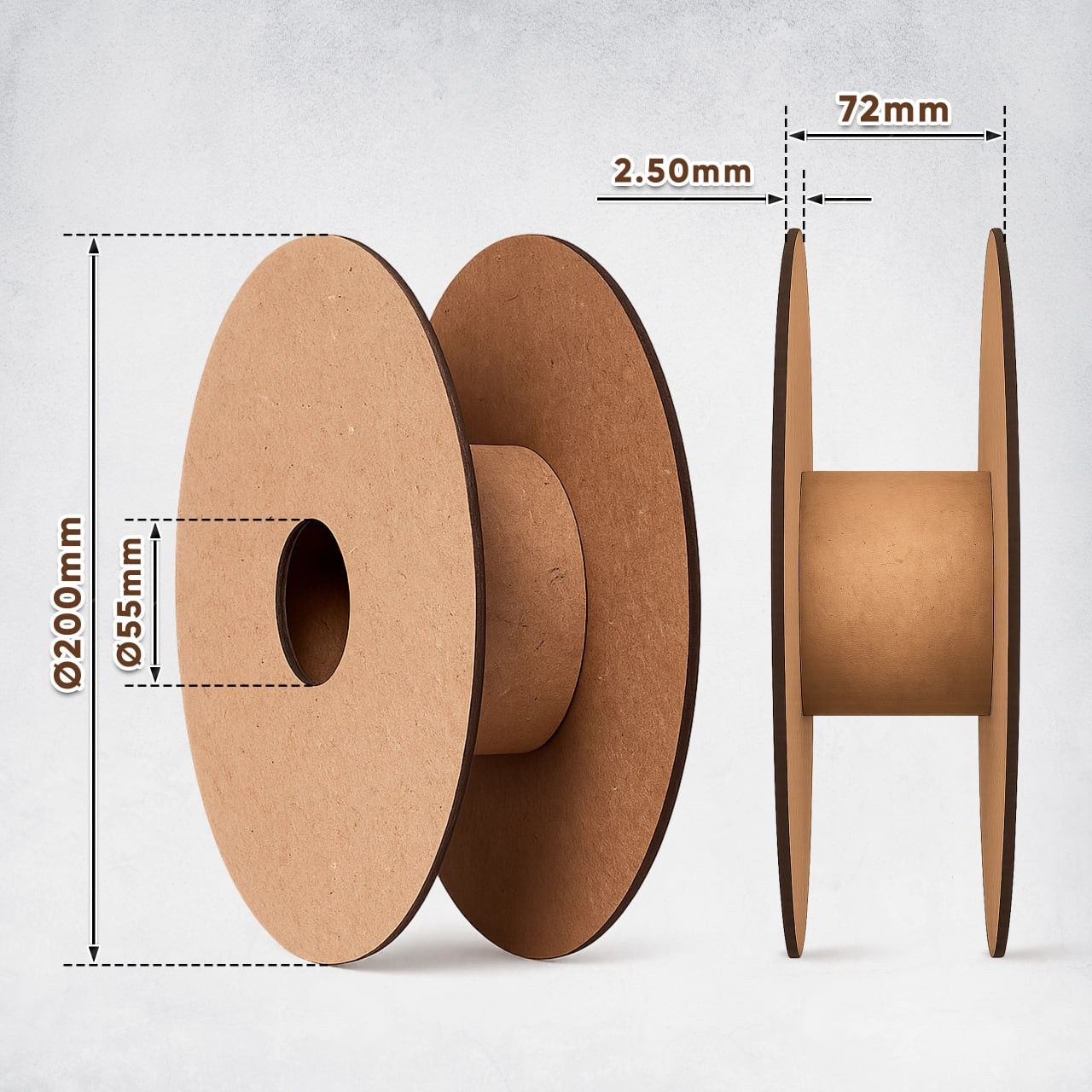
Technical data of the spool
Application
Like standard ABS, ABS+ filament can be used for the production of any cases and casings, both household appliances and medical or auto parts. Pipes and fittings, musical instruments, sports equipment, garden equipment, children's toys are also produced from it. In general, it is better to use ABS+ for solving engineering problems where the material must withstand dynamic loads.
Recommendations for use
Due to its properties, ABS+ can be used at higher print speeds than regular ABS. It also allows you to print models with larger size and volume. In this case, open printers can be used, because the material has excellent adhesion. You can also refuse to use the substrate. In addition, we recommend increasing the retraction (filament rollback) - this will help to obtain better print results. Compared to ABS, the material also has a higher melting point. However, in post-processing, both filaments are completely similar.