Language
Country/Region
Plexiwire
Out of stock
Couldn't load pickup availability


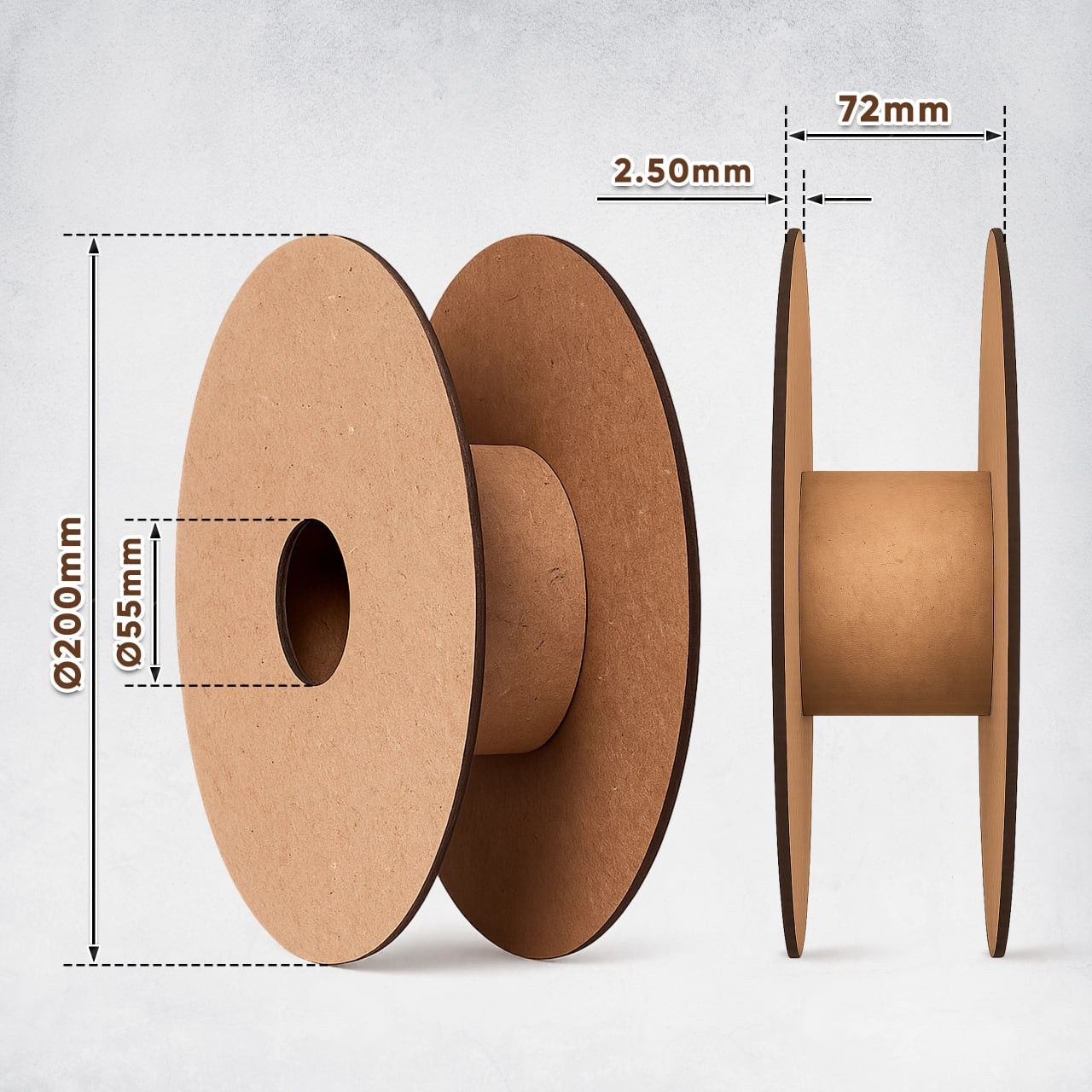

Blue flex filament 1.75 in a 900 g (300 m) spool is typically chosen when prints are not just one-off pieces. It’s the kind of material you load when you expect the job to take time — or repeat several times — and you don’t want to interrupt the process halfway through.
Flexible filament changes how parts behave after printing. Instead of holding a rigid shape, they move, compress, and return back.
With blue flex filament 1.75, the difference becomes obvious once the part is in use. It bends under pressure instead of cracking.
In practice, flex filament blue is often used for grips, protective parts, covers, or anything that needs to absorb small impacts.
Flexible materials don’t behave exactly like PLA. The first setup might take a bit longer, but once things are tuned, flex filament 1.75 tends to stay consistent.
The flow remains steady, and layers form without sudden shifts.
A 900 g spool is less about convenience and more about continuity. You don’t have to think about running out mid-print or stopping between parts.
At the same time, it’s still manageable — not oversized, not awkward to handle.
Blue flex filament has a clear, solid look that works well when parts are meant to be seen.
Across larger surfaces, the color tends to stay even, helping prints look more consistent.
Blue flex filament is used when movement is part of the design, not a problem to avoid.
Blue flex filament 1.75 in a 900 g (300 m) spool fits into workflows where flexibility and consistency need to work together.
FLEX filament is used for printing protective flexible elements for machine and mechanism units, as well as oil seals and other types of sealing elements. Naturally, it is also used for prototyping rubber products. Also, any damper and vibration protection elements are printed from FLEX. Given its properties, the filament can be used to print any product, the application of which requires such a property as flexibility. For example, elements of footwear and automotive parts.
The flexibility of FLEX plastic requires a special approach when printing.
First, it is not fast plastic. It needs to need print slowly - do not set the filament feed faster than 30 mm / s.
Secondly, if you have a bowden feed printer, it will be much more difficult to print than with a direct feed. Judging by the feedback from our customers, printing on bowden is possible, but we recommend direct feeding, which will help to avoid difficulties in work.
Third, follow the recommendations for temperature and speed, carefully adapting them to your results, because the FLEX filament is easily deformed in the nozzle. In general, we recommend using a separate nozzle for this filament - the remnants of old filaments of other types can greatly complicate the process.
Fourth, FLEX absorbs moisture well, so it is important to observe safe storage conditions. In this case, when printing, it is better to ensure that the filament moves freely without any resistance, so that the feed mechanism does not apply force and start to “pull” the material, which can cause stretching or bending.


